
Introduction
Complex process variations and transitions are common in busy health systems, ranging from appointment scheduling and authorizations to referrals and transitions for further services. Poor usability of technology for documentation and communications, as well as provider and staff opposition to change, are barriers to effective processes. The biggest impediments to quality patient outcomes are ineffective communication and coordination. Throughput and workflow enablement that are efficient are possibilities to enhance operations and clinical care.
According to a recent American Society for Quality (ASQ) poll, 78% of healthcare quality professionals believe that enhanced clinical workflow and efficiency are the keys to improving health information technology quality.
Overcoming process difficulties isn’t simple, especially when industry rules like HIPAA are involved. However, by addressing workflow management one area at a time rather than attempting to solve everything at once, payers and providers can implement more efficient workflow practices that contribute to improved job satisfaction and productivity among care teams, better patient experiences, and improved financial outcomes.
Why improving clinical workflow is important?
Improving clinical workflow is the key to increasing hospital profitability. Workflow is a procedure that consists of a sequence of actions that must be done in order to reach a certain objective, which in healthcare is the provision of therapeutic services.
There is a lot of waste in healthcare. Many resources are under-used, many processes are performed manually when automation is possible, and jobs are frequently repeated. It is estimated that over 40% of clinical office work contains repetitive activities and lost effort, and physicians frequently wind up squandering a significant chunk of their working day due to inefficient processes and obsolete communication techniques.
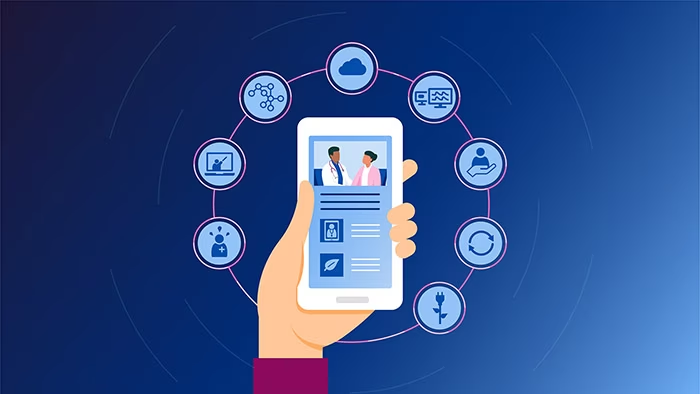
Optimizing clinical processes minimizes waste and helps hospitals use their resources more efficiently, resulting in improved patient flow, increased bed utilization, and higher-quality treatment for patients.
Improving clinical workflow can be difficult. Any adjustments made by top management to fine-tune hospital workflows are likely to impact everyone in the hospital. Before making changes to workflow, it is critical to explain the reasons for the changes to the workers who will be directly affected and gain their support. If clinical personnel are dissatisfied with the modifications, it will be considerably more difficult to fulfill targets, and the adjustments may even have a negative impact on ROI.
How Medical Summarization Helps in improving clinical workflow efficiency
Medical summarizing, the practice of condensing and simplifying medical records, improves clinical workflow efficiency in various ways:
- EHR Integration
Leaders in health systems are being pushed to ensure that technology investments are integrated to enable the greatest patient experience possible.
As EHR use continues to rise in the US healthcare sector, electronic health records assist healthcare practitioners in providing better treatment by enhancing clinical workflow.
EHR digitalizes patient health records and makes them available to healthcare practitioners for secure access. EHR not only benefits healthcare professionals by improving health outcomes, but it also benefits patients by lowering their healthcare expenditures thanks to user-friendly EHR features. Overall, EHR deployment increases patient involvement and care coordination, which helps to optimize clinical workflow.
- Time-Saving
Medical summaries remove vital information from lengthy medical records, saving healthcare personnel time during patient visits. They can swiftly evaluate important data without having to trawl through long documentation.
- Improving Clinical Workflow Requires Updating Communication Systems
Reliance on antiquated communication systems such as pagers, faxes, landlines, and email is one of the most significant drains on productivity in healthcare. While other businesses have adopted new communication tools, healthcare has lagged far behind. One in every four hospitals uses pagers to connect with physicians, 90% utilize fax machines, and email is still used to relay essential information. According to one research, 75% of medical communication is done via fax, despite the fact that faxing can easily result in mistakes and delays in delivering critical information.
Communication systems are a major source of dissatisfaction for physicians, nurses, and other hospital personnel, resulting in significant time lost. It has been estimated that a hospital doctor wastes around 45 minutes per day as a direct result of poor communication technologies and that a typical 500-bed hospital loses approximately $4 million per year as a result of these antiquated communication techniques.

Improving clinical workflow should thus begin with the replacement of these out-of-date and inefficient communication techniques and the implementation of a modern communication system conducive to effective clinical workflow.
- Reduced Errors
Medical summary decreases the risk of mistakes caused by misinterpretation or overlooking of essential information by offering a clear and ordered perspective of patient data. - Enhanced Decision-Making
Summaries provide a brief summary of a patient’s medical history, present condition, and treatment plan. This helps professionals make educated judgments regarding diagnostic and treatment alternatives.
Concluding Thoughts
Finally, medical summarization improves clinical workflow by increasing efficiency, communication, decision-making, and patient care. As more healthcare institutions implement electronic health records and data-driven techniques, the role of medical summarization in speeding and improving clinical operations becomes increasingly important.

You may securely save all of your medical information online with Oriental Solutions, Medical summarization service/ company in India making it easier for doctors to retrieve your medical data at each session. Are you ready to improve your medical reports? Investigate our professional summarizing services right now.
Unlock efficient healthcare with Oriental Solutions. Optimize your medical reports today!
13 Responses